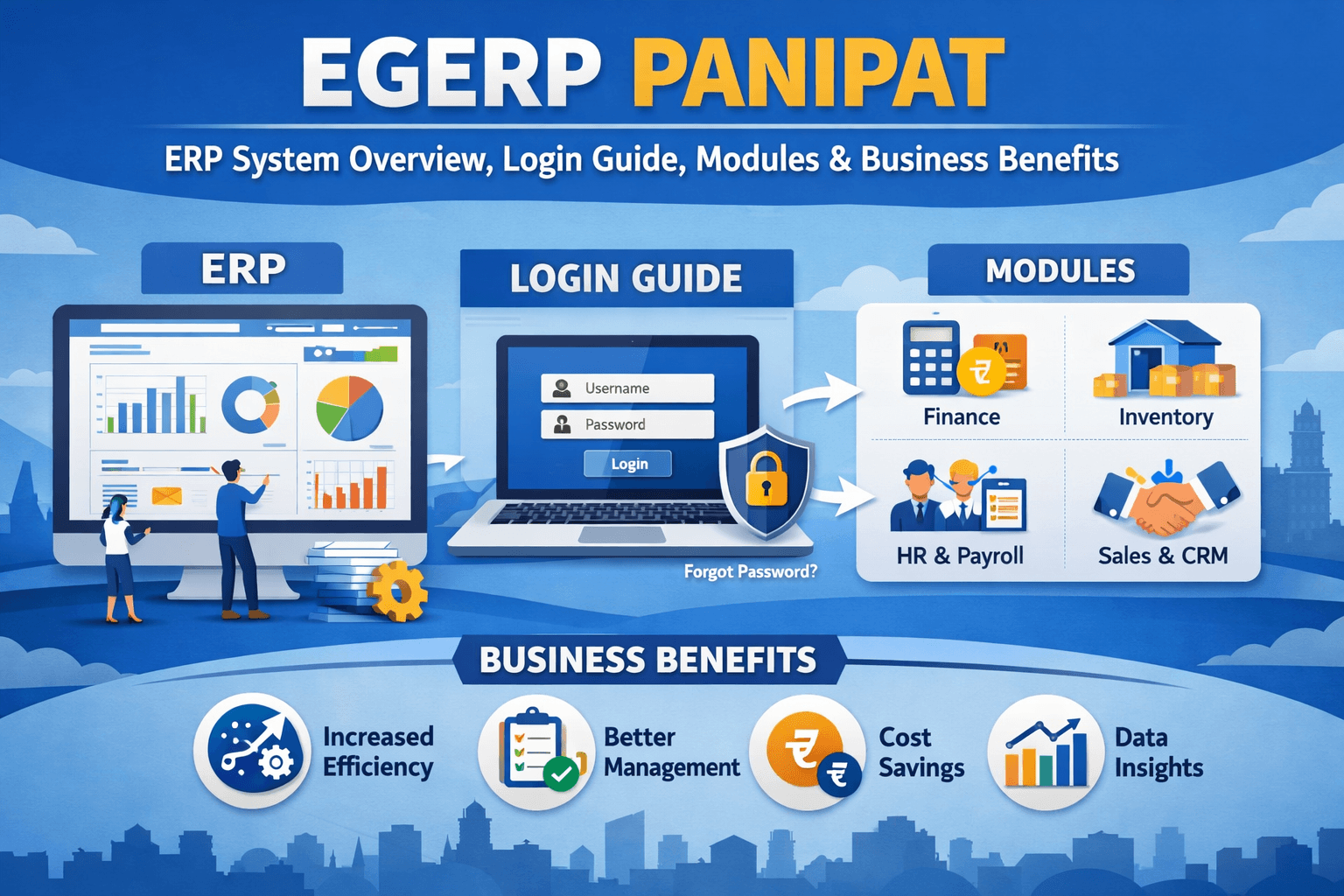
EGERP Panipat: ERP System Overview, Login Guide, Modules & Business Benefits
Businesses in Panipat are rapidly shifting toward digital management systems to handle complex operations. As companies grow, relying only on spreadsheets and manual processes often leads to errors, delays, and miscommunication between departments. To solve these challenges, many organizations are adopting EGERP Panipat, an enterprise resource planning system designed to bring all business activities into one centralized platform.
From finance and inventory to production and human resources, EGERP Panipat allows companies to manage operations in a structured and automated way. Industries such as textiles, manufacturing, and trading firms in Panipat benefit the most from ERP systems because their workflows involve multiple departments and large volumes of data.
By integrating information across the organization, EGERP Panipat helps businesses reduce operational confusion, improve transparency, and make faster decisions based on accurate data.
Key Modules of EGERP Panipat
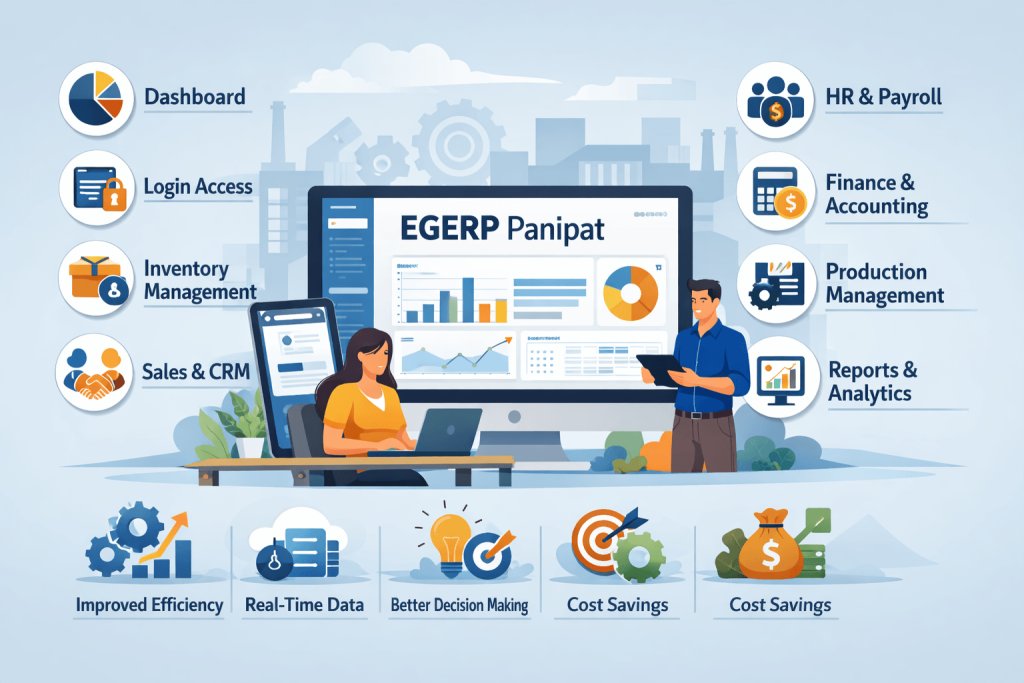
EGERP Panipat offers several modules that manage different aspects of business operations. Each module works independently but shares data with the others, ensuring a smooth flow of information across departments.
1. Finance Management
The finance module automates accounting processes such as ledgers, expense tracking, and financial reporting. Managers can generate reports instantly, making it easier to monitor cash flow and overall financial health.
2. Inventory Management
Inventory tracking is essential for manufacturing and trading businesses. This module monitors stock levels, manages warehouses, and alerts teams when inventory reaches reorder points. This helps companies avoid production delays caused by shortages of raw materials.
3. Production Management
For factories and manufacturing units, the production module organizes work schedules, monitors progress, and maintains quality standards. It also tracks work-in-progress items and ensures that orders are completed on time.
4. Human Resource Management
The HR module simplifies tasks like payroll processing, attendance tracking, employee records, and performance reviews. Automation reduces manual errors and allows HR teams to focus more on workforce development.
5. Centralized Data System
All business departments operate within the same system, meaning company leaders can access real-time reports and insights whenever needed. This centralized data improves coordination between teams and enables quicker decision-making.
Importance of Local ERP Support in Panipat
One major advantage of choosing EGERP Panipat is the availability of local technical support. Many companies underestimate how valuable this can be until a system issue occurs.
When ERP problems arise during critical operations, waiting for remote support can cause serious delays. With a local support team available in Panipat, technicians can visit offices or factories directly to diagnose and fix issues.
Local ERP experts also understand regional business practices and GST compliance requirements in Haryana, making communication smoother. Their familiarity with the local language and work culture helps organizations implement ERP solutions more efficiently.
Step-by-Step Implementation Process
Implementing an ERP system requires careful planning rather than simply installing software. Businesses typically follow a structured process when deploying EGERP Panipat.
1. Requirement Analysis
Companies begin with workshops to understand their workflows and define business goals. This stage helps determine how the ERP system should be configured.
2. Gap Analysis
Experts compare the company’s existing processes with the ERP’s standard features to identify necessary adjustments or customizations.
3. System Configuration
During this stage, company data such as department structures, financial accounts, and user roles are set up within the ERP system.
4. Data Migration
Existing records—such as customer details, supplier information, and product inventories—are cleaned and transferred to the new platform.
5. Employee Training
Staff members receive hands-on training sessions to ensure they understand how to perform daily tasks within the system.
6. Pilot Testing
Before the official launch, businesses conduct trial runs to identify any issues and refine workflows.
7. Go-Live and Support
After deployment, support teams monitor the system closely for the first few weeks to resolve any early problems quickly.
Cost Structure and Return on Investment
ERP adoption is a major investment, but the long-term benefits often outweigh the costs. For a mid-sized manufacturing company in Panipat, the expenses typically include software licensing, implementation, and training.
| Cost Component | Estimated Cost | Expected Benefits |
|---|---|---|
| Software Subscription (1 year) | ₹4,00,000 | Faster reporting and fewer accounting errors |
| Implementation Services | ₹2,50,000 | Custom setup tailored to business needs |
| Training & Support | ₹1,00,000 | Improved employee efficiency |
| Total Investment | ₹7,50,000 | Payback within 10–12 months |
Organizations usually recover the investment through improved productivity, better inventory control, and quicker financial decision-making.
Challenges During ERP Adoption
Although ERP systems offer numerous advantages, businesses may encounter challenges during implementation.
Employee Resistance
Staff members accustomed to manual processes may hesitate to adopt new software. Early involvement and proper training can help ease this transition.
Data Accuracy Issues
Old databases often contain duplicate or incorrect records. Cleaning and validating data before migration is essential to prevent system errors.
Training Limitations
Relying solely on manuals or online sessions may not be enough. Practical workshops and easy-to-follow guides help employees learn faster.
Post-Launch Technical Problems
Even after successful deployment, minor issues may appear. Having a reliable support team ensures these problems are resolved quickly without interrupting daily operations.
Future Trends for EGERP Systems in Panipat
ERP systems are continuously evolving with modern technology. Future versions of EGERP Panipat are expected to include advanced features that enhance business intelligence and automation.
Artificial Intelligence Integration
AI tools can analyze data patterns to predict demand, detect financial anomalies, and recommend operational improvements.
Mobile ERP Applications
Sales teams and managers will increasingly access ERP dashboards through mobile devices, enabling them to monitor operations while traveling.
IoT Connectivity
Factories may integrate ERP systems with smart machines and sensors, allowing real-time monitoring of equipment performance and energy usage.
Advanced Data Analytics
Modern ERP systems will provide deeper insights through predictive reports and interactive dashboards, helping businesses plan strategies more effectively.
Conclusion
EGERP Panipat is transforming the way businesses manage their operations. By integrating finance, inventory, production, and HR into a single platform, the system improves efficiency and reduces operational errors.
The presence of local support teams in Panipat further strengthens the system’s value, ensuring businesses receive quick assistance and guidance tailored to regional needs.
With careful planning, employee training, and continuous system upgrades, companies can achieve significant returns from ERP adoption. As technologies like AI, mobile access, and IoT continue to evolve, ERP systems will play an even greater role in helping businesses in Panipat remain competitive and efficient in the years ahead. Dive into mindful living with Meaning Aura.

A former editor and grammar geek, David Langford has spent years refining the art of clear communication. He combines his journalism background with a knack for teaching, offering straightforward tips to master tricky grammar rules. When he’s not proofreading, he’s probably debating Oxford commas.