“kick rocks”: Origins, Meaning, and 25 Alternative Phrases
Language evolves fast, and slang often carries more meaning than we realize. One such phrase that pops up in casual talk is “kick rocks.” You’ve probably heard it in movies, TV shows, or maybe even from a frustrated friend. But what does it really mean? And should you even be saying it?
This guide breaks down the meaning of “kick rocks,” its history, and when to use it. We’ll also offer a long list of friendlier (or harsher) alternatives—because, let’s face it, sometimes the mood calls for something different.
What Does “kick rocks” Mean?
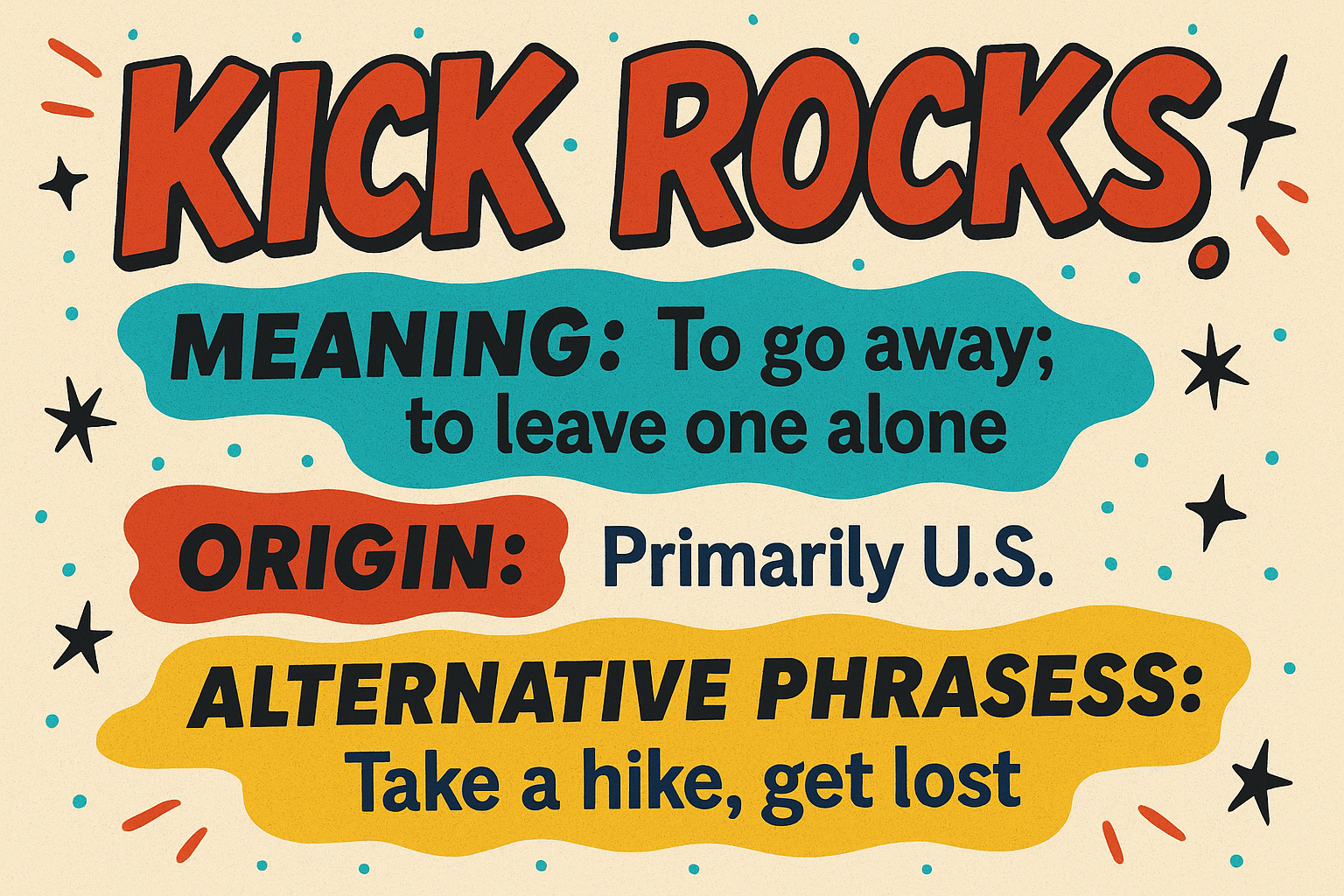
“Kick rocks” is a slang expression that means “go away” or “leave me alone.” It’s dismissive. Not quite as harsh as “get lost,” but not exactly polite either.
It can come off as annoyed, irritated, or just done with someone. It tells the other person that you’re not interested in what they have to say or that you want them out of your space.
Some examples:
- “He kept trying to explain himself, but I told him to kick rocks.”
- “If she thinks I’m apologizing again, she can kick rocks.”
The tone makes a big difference. In a joke between friends, it can be playful. But in an argument? Yeah, it stings.
The Origins and History of the Term “kick rocks”
Nobody knows exactly where “kick rocks” started, but most agree it dates back to mid-20th century American slang. Some think it comes from the act of aimlessly kicking rocks while walking away. That image—frustrated, alone, and kicked out—fits the phrase well.
It’s been used in various subcultures, including punk, hip-hop, and street talk. It gained popularity in the ’80s and ’90s thanks to music, movies, and TV shows.
While the phrase never became mainstream polite language, it stayed relevant in urban and pop culture. It carries a rough edge but is still vague enough to avoid sounding obscene.
Check This Out: The Meaning of a Soda Tab: History, Slang, and Its Cultural Significance
25 Alternative Phrases to Use Instead of “kick rocks”
Sometimes you want to say the same thing without sounding too harsh—or maybe you want to double down. Either way, here are 25 alternatives with meanings and examples.
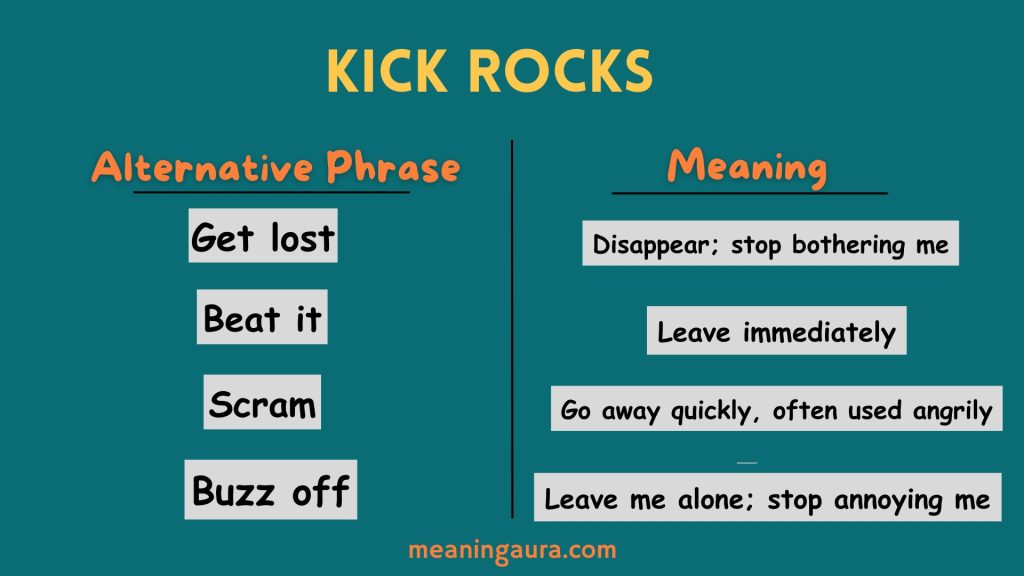
1. Get lost
Meaning: Go away immediately. Example: “You cheated on me, and now you want a second chance? Get lost.”
2. Scram
Meaning: Leave right now. Example: “Hey kid, scram! This is private property.”
3. Buzz off
Meaning: Leave me alone. Example: “You’ve asked me three times. Buzz off already.”
4. Take a hike
Meaning: Go away in a not-so-nice tone. Example: “If you’re not helping, take a hike.”
5. Beat it
Meaning: Leave now, and fast. Example: “Beat it before I call security.”
6. Go fly a kite
Meaning: Go away, often said to a child or when trying to be funny. Example: “You’re bugging me. Go fly a kite.”
7. Hit the road
Meaning: Time to leave. Example: “You’ve overstayed your welcome. Hit the road.”
8. Take a walk
Meaning: Walk away; leave me alone. Example: “Why don’t you take a walk and cool off?”
9. Move along
Meaning: Don’t stop here. Example: “Nothing to see here, folks. Move along.”
10. Get out of my face
Meaning: Leave me alone physically and emotionally. Example: “You lied again. Get out of my face.”
11. Bounce
Meaning: Slang for leave quickly. Example: “This party is boring. Let’s bounce.”
12. Leave me be
Meaning: Let me have some peace. Example: “I’ve had a rough day. Just leave me be.”
13. Shove off
Meaning: Go away, slightly British in flavor. Example: “You’re not wanted here. Shove off.”
14. Vamoose
Meaning: Leave fast (Western slang). Example: “Time to vamoose before the sheriff gets here.”
15. Take your nonsense elsewhere
Meaning: I’m done with your drama. Example: “You think I’ll believe that? Take your nonsense elsewhere.”
16. Go kick dirt
Meaning: Similar to “kick rocks.” Example: “You want sympathy? Go kick dirt.”
17. Walk it off
Meaning: Go away and calm down. Example: “You’re overreacting. Walk it off.”
18. Don’t let the door hit you
Meaning: Get out, and good riddance. Example: “Leaving? Don’t let the door hit you on the way out.”
19. Hit the bricks
Meaning: Go away, often used in street slang. Example: “You’re not welcome here. Hit the bricks.”
20. Peace out
Meaning: Friendly way of saying goodbye. Example: “I’m done arguing. Peace out.”
21. Shoo
Meaning: Leave, often used for animals or annoying people. Example: “Shoo! I’m busy.”
22. Outta here
Meaning: Time to go. Example: “It’s late. I’m outta here.”
23. Skedaddle
Meaning: Leave quickly. Example: “We better skedaddle before traffic hits.”
24. Bug out
Meaning: Leave, sometimes in panic. Example: “Cops showed up, and he bugged out.”
25. Shoo fly
Meaning: Childish or humorous way to say go away. Example: “Shoo fly, don’t bother me.”
Don’t Miss This: Understanding “Down Bad”: Origins, Meaning, and 25 Alternative Phrases for Modern Slang
How and When to Use the Phrase “kick rocks” in Conversation
Context is everything. Saying “kick rocks” to a close friend in a teasing voice might make them laugh. Say it to a stranger in a heated moment, and you might start a fight.
Use it when:
- You want someone to leave you alone
- You’re frustrated and want to show it
- You’re using humor among friends
Avoid it when:
- You’re in a professional setting
- You don’t know the person well
- You’re trying to de-escalate tension
Tone matters. If your voice is calm or joking, “kick rocks” can come off as playful. But if you sound annoyed or cold, it’ll definitely sting.
The Psychological Impact of Using Phrases Like “Kick Rocks”
Words hold power. Saying something like “kick rocks” shuts down communication. It tells the other person: “I don’t value what you have to say.” That can hurt. Especially in relationships, whether personal or professional, these small phrases can build walls. People remember how you made them feel, not just what you said.
On the flip side, setting boundaries is important. If you feel someone is pushing your limits, expressing frustration is healthy. But choosing your words carefully helps keep the door open for future conversations. It’s a balancing act. You don’t always have to be polite, but be aware of the impact your tone and choice of words can have.
Conclusion
“Kick rocks” is a compact, punchy way to tell someone to go away. It carries attitude, frustration, or humor—depending on how you say it. But like all slang, it comes with baggage. Sometimes it’s better to swap it out for something less cutting or more clever.
Language gives us choices. With over two dozen options to replace “kick rocks,” you can say exactly what you mean, without burning bridges (unless you want to). Use this guide as a reference for those moments when you need just the right phrase to say, “I’m done here.”