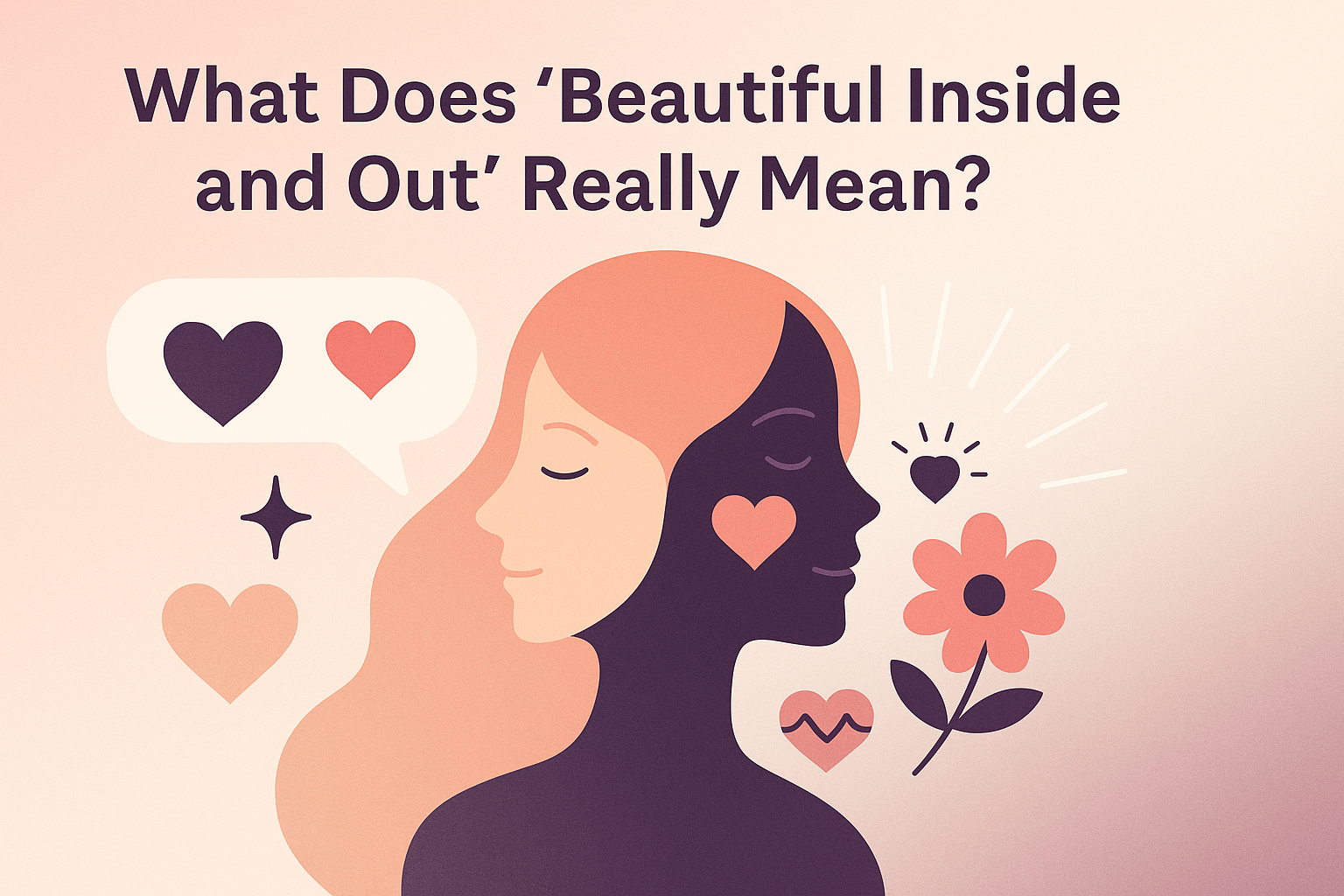
What Does “Beautiful Inside and Out” Really Mean?
“Beautiful inside and out” is one of those phrases that carries a lot of weight. You’ve probably heard it in movies, read it in social media captions, or maybe even had someone say it to you. But what does it really mean? And when is the right time to use it?
This guide breaks it all down—without fluff. We’ll explain where the phrase comes from, how to use it, and what to say instead if you’re looking for something fresh. Plus, we’ll throw in some simple ways to reply when someone calls you “beautiful inside and out.”
Let’s get into it.
What Does “Beautiful Inside and Out” Actually Mean?
At its core, this phrase is a compliment. It means someone is not only physically attractive (“outside”) but also kind, honest, or caring (“inside”).
It’s not just about looks. It’s about who someone is as a person.
People usually use this phrase to express deep admiration. It’s often said about someone who radiates positivity, shows empathy, or helps others. It’s the kind of compliment that suggests beauty isn’t skin-deep—it comes from the heart, too.
The Origin and History of the Phrase
The exact origin is hard to pin down, but phrases like this have been around for centuries. The idea that real beauty comes from within dates back to ancient times. Philosophers like Plato and Socrates talked about inner beauty as something more lasting than outer looks.
In literature, especially during the Victorian era, characters praised for being “lovely inside and out” were often held as moral ideals. Over time, the phrase evolved into the modern version we hear today.
By the early 20th century, “beautiful inside and out” became more common in casual speech. It gained traction in love letters, film scripts, and eventually, social media captions.
How & When to Use “Beautiful Inside and Out”
When should you say it?
Use it when you want to make someone feel deeply appreciated—not just for how they look, but for who they are. It works best in meaningful contexts.
You might say it:
- In a birthday card for a close friend
- At a wedding speech
- As a comment under someone’s photo
- During a heartfelt conversation
Who is it for?
While it’s often used to describe women, there’s no rule saying it can’t apply to men. Kindness, empathy, and honesty aren’t gendered traits. And honestly, everyone could use a bit more love like this.
But be careful: If you throw this phrase around too often, it can lose its impact. Use it sincerely, not just as a go-to line.
Find Out More: What Does “4ktrey” Mean? (Plus Polite Alternatives You Can Use)
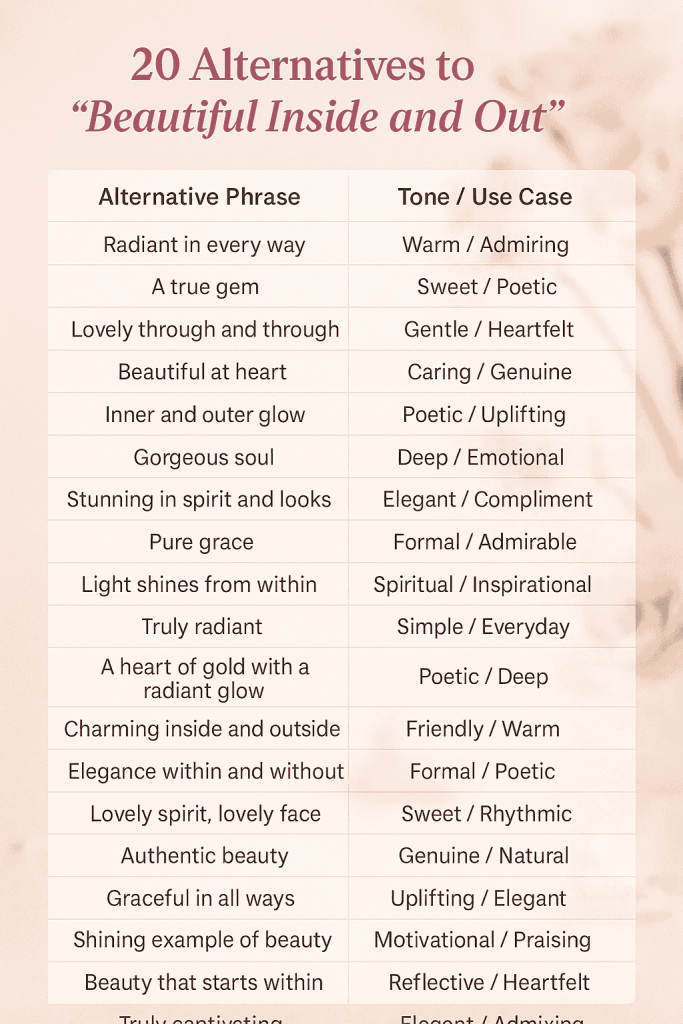
10 Alternatives to “Beautiful Inside and Out”
Let’s be honest—sometimes you want to say the same thing without sounding like everyone else. Here are 20 alternative ways to say someone is “beautiful inside and out.”
Each one comes with a short breakdown:
1. A truly radiant soul
Meaning: Glows with positivity and kindness
Explanation: Goes beyond surface-level beauty
Example: “She’s a truly radiant soul—everyone feels better around her.”
Best Use: Social captions or cards
2. Kind-hearted and graceful
Meaning: Has both inner warmth and elegance
Explanation: A gentle, warm presence
Example: “He’s so kind-hearted and graceful under pressure.”
Best Use: Wedding speeches, compliments
3. Honest and stunning
Meaning: Tells the truth, looks amazing
Explanation: A mix of integrity and good looks
Example: “She’s honest and stunning—that combo is rare.”
Best Use: Casual praise
4. Looks good, lives better
Meaning: Attractive but lives with purpose
Explanation: Celebrates lifestyle and values
Example: “He looks good, but he lives better. Always helping others.”
Best Use: Social shoutouts
5. A heart of gold
Meaning: Pure and selfless
Explanation: A classic way to show inner beauty
Example: “She’s got a heart of gold, always helping out.”
Best Use: Friendly compliments
6. Graceful inside and out
Meaning: Elegant in actions and appearance
Explanation: Poised and kind
Example: “He’s graceful inside and out—never loses his cool.”
Best Use: Formal praise
7. Glows from within
Meaning: True beauty starts inside
Explanation: Someone whose energy shows in their smile
Example: “She glows from within—genuine and joyful.”
Best Use: Instagram captions
8. Compassionate and charming
Meaning: Warm and engaging
Explanation: Emotional intelligence meets charisma
Example: “He’s compassionate and charming—people just open up to him.”
Best Use: Dating profiles or compliments
9. Emotionally intelligent and lovely
Meaning: Understands people and is easy to be around
Explanation: Deep, empathetic connection
Example: “She’s emotionally intelligent and lovely—you always feel heard.”
Best Use: Work or leadership praise
10. Wholesome beauty
Meaning: Clean, pure, and balanced
Explanation: Feels grounded, not flashy
Example: “He’s got that wholesome beauty you can’t fake.”
Best Use: Low-key compliments
Simple and Polite Responses to “Beautiful Inside and Out”
Now, let’s talk about something that trips people up: how to reply when someone gives you this compliment.
It’s a sweet thing to hear—but it can catch you off guard. Here are a few polite, natural responses:
1. “That means a lot—thank you.”
Simple and warm. Shows you appreciate it.
2. “You’re too kind, really.”
A humble way to say thanks without brushing it off.
3. “Coming from you, that’s such a big compliment.”
Makes the other person feel appreciated, too.
4. “Wow, thank you—I’m blushing now!”
Adds a light, playful tone.
5. “I try to be! But that means so much to hear.”
Acknowledges the effort it takes to be kind and genuine.
The key? Don’t overthink it. A short, sincere reply is always better than a long awkward one. If the compliment came in a message, a simple “thank you” emoji or heart goes a long way too.
Conclusion
“Beautiful inside and out” isn’t just a cliché—it’s a meaningful compliment when used with care. It captures the rare blend of appearance and character, and it lands best when said sincerely.
Whether you’re using it, looking for synonyms, or just wondering how to reply, the goal is simple: be genuine. Words like these stick. They build people up. And in a world full of surface-level talk, that kind of real praise matters.
So next time someone shows true beauty—through kindness, honesty, or a simple smile—let them know. And if someone says it to you? Smile, thank them, and remember: they’re seeing the best of you.

A former editor and grammar geek, David Langford has spent years refining the art of clear communication. He combines his journalism background with a knack for teaching, offering straightforward tips to master tricky grammar rules. When he’s not proofreading, he’s probably debating Oxford commas.